
Prophecy and Fulfillment in Rome
Quo VadisThis thread connects Peter’s vision of Rome’s future with the community’s growth and the novel’s account of religious change.
increasing Bearing strength in each event
 decreasing
Bearing strength in each eventdecreasingA City of the Beast

A City of the Beast
Rome’s apparent invincibility
Peter sees the city’s wealth, armies, and imperial authority as a terrifying concentration of power.
A spiritual question
He wonders how the Christian message can take root in a city that seems ruled by evil.
Blood and Tears
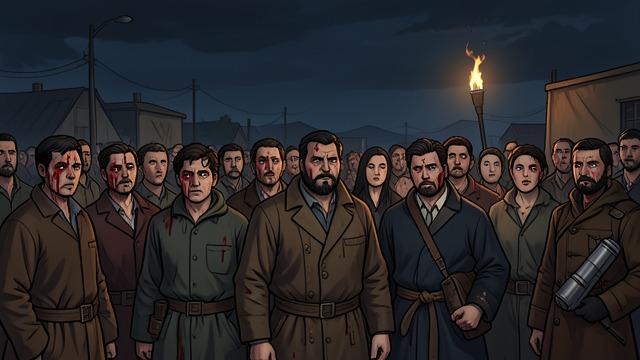
Blood and Tears
The community appears broken
Executions scatter believers and kill many of the leaders and members on whom the Roman church depended.
A seed survives
Peter interprets the martyrs’ witness as meaningful labor rather than a futile defeat.
The Appian Vision
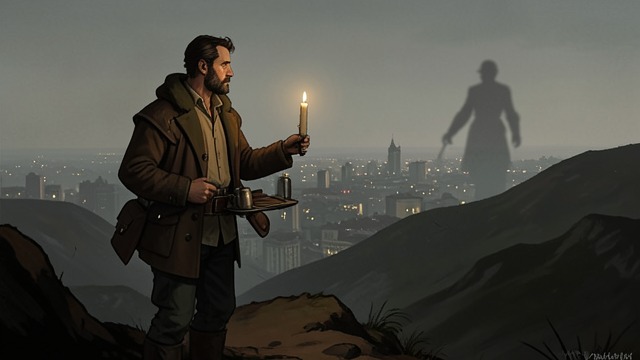
The Appian Vision
Christ redirects Peter
The vision of Christ on the Appian Way makes Peter understand that Rome remains his responsibility.
Return becomes prophecy
By turning back, Peter accepts the city as the place where the Christian mission will confront imperial power.
A Capital for the Faith
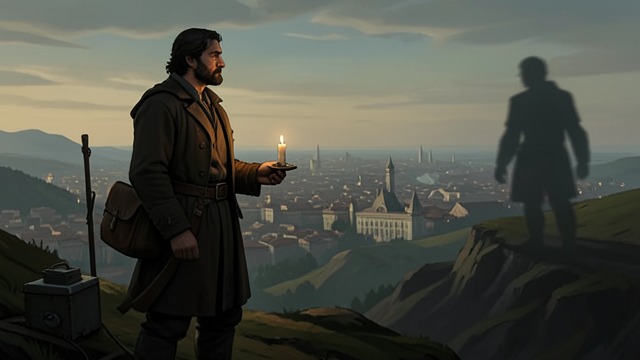
A Capital for the Faith
A new interpretation
Peter believes Rome will become the center of a spiritual community rather than remain Nero’s possession.
Authority redefined
The city’s future belongs, in his vision, to a truth rooted in sacrifice, mercy, and communal loyalty.
The Basilica’s Future
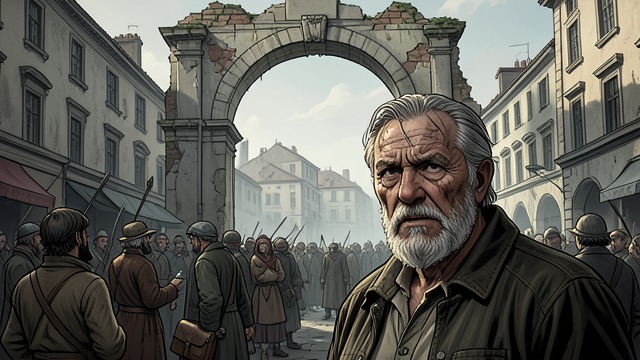
The Basilica’s Future
Political power passes
Nero dies and the imperial regime loses the permanence it once claimed.
Religious memory endures
The closing image of the basilica associated with Peter gives material form to the prophecy that Rome will become a Christian center.
When Peter first sees Nero’s retinue
During the persecution after the Great Fire
As Peter leaves Rome before his capture
After Peter resumes his ministry in Rome
In the epilogue, after Nero’s death
